A bold, recognisable brand that enabled Championship-level sponsorship conversations and established credibility within professional sport.
Brand Identity
Visual Design
Print & Digital Assets
Brand Presentations
Sport is a confidential gambling addiction consultancy for professional sportspeople, founded by Alex Spivey, who brings 15 years of lived experience of addiction, recovery and support to the work. Alex needed a brand that could open doors, something credible and modern enough to sit comfortably in a room with professional football clubs and be taken seriously. I led the full brand system, from logo and identity through to print collateral, presentation templates, and a web presence designed to convert a first meeting into a signed contract.
Case Study
Gambling addiction in professional sport is a largely hidden problem. Players have the money, the time, the access, and a culture that normalises it, with gambling on the team bus, online in hotels, and bets placed before kickoff with outcomes sitting in their heads during the game. The direct correlation between a player's gambling and their performance on the pitch is rarely talked about, but the logic is straightforward: a player in recovery is an asset to a club, a player suffering in silence is a liability.
Alex's proposition was simple and well priced, a monthly retainer for a designated consultant embedded within the club, offering confidential, informal support before a problem becomes a crisis. The existing pathway, five weeks of residential care with the PFA, Sporting Chance, and the club all being formally notified, created enough fear and stigma that players would avoid seeking help until they hit rock bottom. Alex wanted to be the alternative: one person, inside the club, who understood the problem from the inside.
The challenge for the brand was matching the quality of that proposition. Without a polished, credible identity, he wouldn't get past the front door.
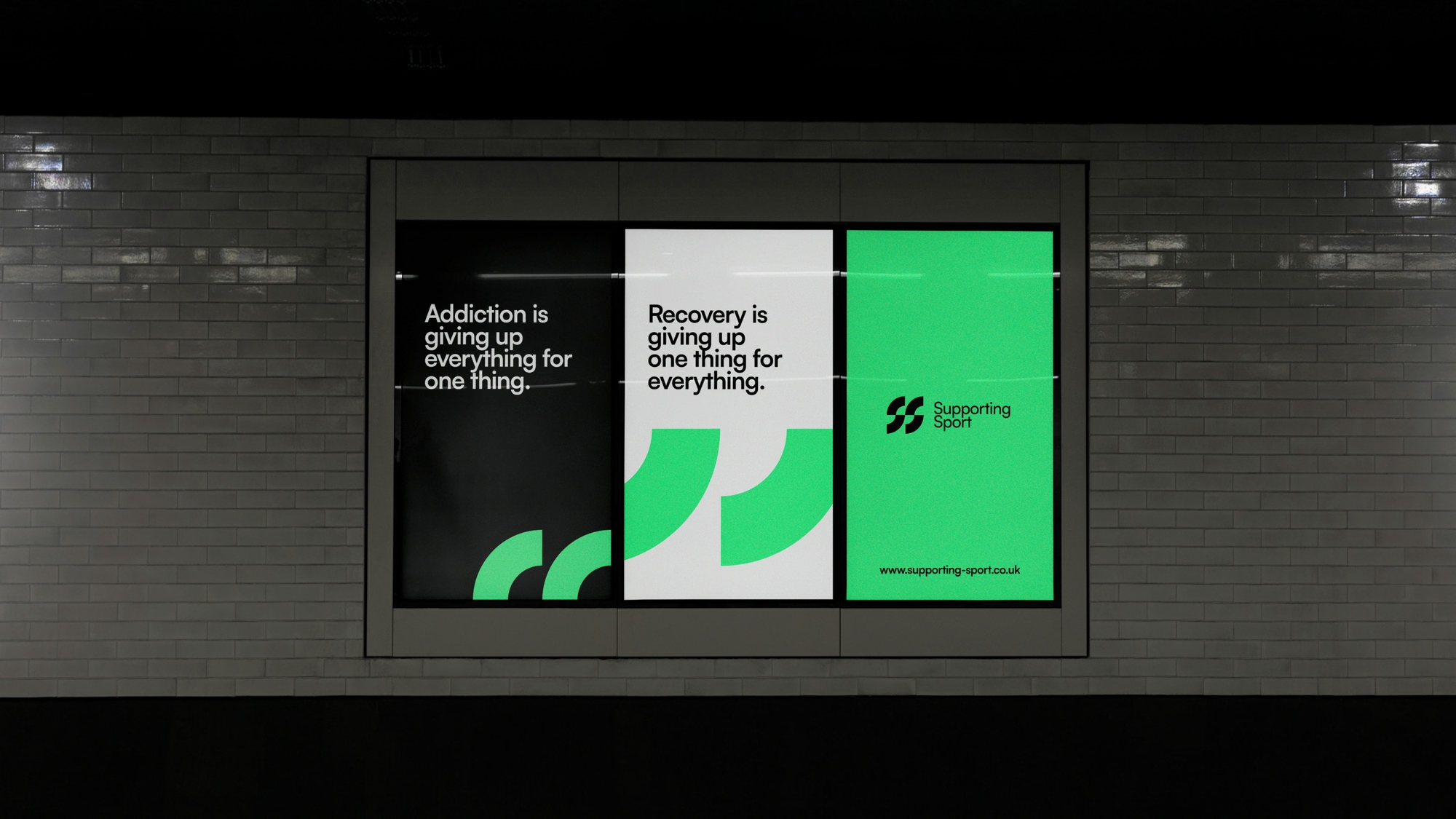
Alex came to me with fragments, rough ideas and a clear sense of the world he wanted to operate in. The brief pointed directly at the visual language of elite football. Rather than exploring directions that might feel out of place in a boardroom at a Championship club, we looked closely at what the most recognisable brands in the game were already doing and built something that felt native to that environment. Electric green became the dominant colour, bold, high energy, and immediately distinctive in a sector where navy, white and red dominate. The SS logomark used overlapping quotation forms to suggest conversation and confidentiality without leaning on the tired visual clichés of the mental health space. Typography was kept clean and authoritative. The result was a brand that felt like it belonged in professional sport, which was the only brief that mattered.
The brand system was built out progressively, starting with the core identity and expanding into everything Alex needed to have professional conversations. The logo and visual identity came first, establishing the foundation. From there the system extended into email signatures, business cards, printed handouts, and a full presentation template.
The pitch deck was the centrepiece of the collateral. Structurally it walked a director of football through the full picture: Alex's personal experience and credentials, the scale of the problem backed by Gambling Commission data, the cultural factors specific to professional sport, the effects on players and clubs, the current inadequate pathway, and finally the proposition itself. Visually it used full bleed electric green layouts alternating with clean white pages, with the logomark anchoring every slide and the quotation mark motif used as a consistent graphic device throughout. The deck was designed to be handed across a table and make the commercial case without Alex having to fill every gap himself.
The website was designed around two distinct audiences with very different needs. Club directors and decision makers needed to understand the proposition quickly and feel confident enough to start a conversation. Players who might be struggling needed something that felt discreet, approachable, and low pressure, a way in that didn't feel like formally raising their hand.
The homepage was built around conversion focused language designed to speak to both, with the site due to go live shortly. Performance will be tracked closely from launch to understand which audience is engaging and how, with copy and structure refined from there.
The brand gave Alex the credibility to have the conversations he needed. He secured his first contract with a Championship club, with further conversations following. The brand system was built to scale with the business as he moves into more clubs.
The brand works brilliantly on screen and in digital contexts. In print, electric green is a harder colour to control in CMYK and the collateral didn't reproduce with the same vibrancy as the digital work. Pantone specification would have solved it, and it's not knowledge I was short of, I just didn't anticipate how much of the project would live in print when the brand decisions were being made. Something to get ahead of earlier next time.


